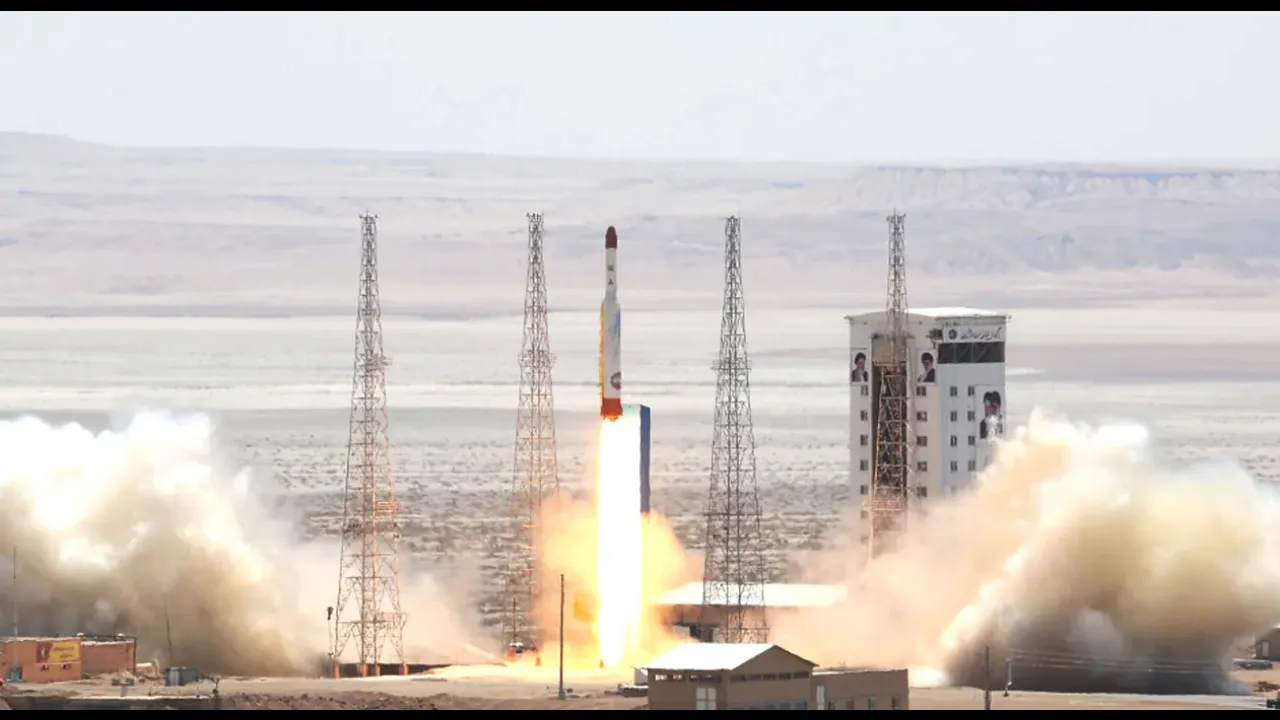
For nations and organizations looking to establish a presence in the cosmos, the journey begins with a reliable and powerful launch vehicle. Over the past decade, Iran has steadily advanced its capabilities in this domain, culminating in a series of ambitious projects designed to provide independent access to orbit. While early efforts like the Safir series laid foundational groundwork, it's the Simorgh program that truly embodies the nation's aspirations for heavier payloads and more complex missions.
The Pedigree of Power: Ancestry and Evolution
The Simorgh (Persian for "Phoenix") rocket doesn't emerge from a vacuum; it stands on the shoulders of prior advancements. Its development draws heavily from technology honed through various programs, leveraging expertise gained from liquid-fueled missile technology. Imagine a lineage where each generation refines the power, precision, and capacity of the last. The Simorgh represents a significant leap from its predecessors, moving towards a much more substantial orbital capability.
Initially revealed in the early 2010s, the Simorgh was envisioned as a multi-stage, liquid-fueled rocket designed to launch satellites weighing up to several hundred kilograms into Low Earth Orbit (LEO). Its architecture is reminiscent of established heavy-lift designs, featuring multiple stages that ignite in sequence to steadily accelerate the payload beyond Earth's gravity.
Milestones in Orbit: Satellites Carried by Simorgh
While the journey to consistent orbital success is often punctuated by trials and learning, the Simorgh program has been dedicated to placing Iranian-made satellites into space. These missions are critical for demonstrating the launcher's ability to not only reach orbit but also to precisely deploy valuable payloads.
One of the key satellites associated with the Simorgh program is the Zafar (Victory) satellite. Although its initial launch attempts faced challenges, the mission demonstrated the Simorgh's capacity to carry and attempt to deploy a satellite designed for Earth observation and data collection. Another notable payload has been the Mahda satellite, intended for research and telecommunications, showcasing the versatility of the launch vehicle for different types of missions. Each launch, successful or not, provides invaluable data, pushing the boundaries of engineering and operational expertise.
Looking Ahead: The Simorgh 3 and Beyond
The evolution doesn't stop. While details on specific iterations like "Simorgh 3" are part of an ongoing, classified development process, the trajectory of the program is clear: to achieve greater payload capacity, enhanced reliability, and more advanced orbital deployment capabilities. This continuous improvement reflects a deep commitment to mastering space access.
Future versions of the Simorgh are expected to feature more powerful engines, refined guidance systems, and potentially even larger fairings to accommodate bigger and more sophisticated satellites. This upward trajectory is crucial for meeting the demands of burgeoning space applications, whether for scientific research, Earth monitoring, or telecommunications.
What does this mean for the future? For those considering their next step in space, the ongoing development and persistent efforts in programs like Simorgh highlight a nation's enduring commitment to providing indigenous and robust access to orbit. The strategic significance of such capabilities cannot be overstated, offering independent pathways to achieve space-based objectives and contribute to a growing global space economy. The investment in these powerful "messengers" to the stars is an investment in future possibilities.