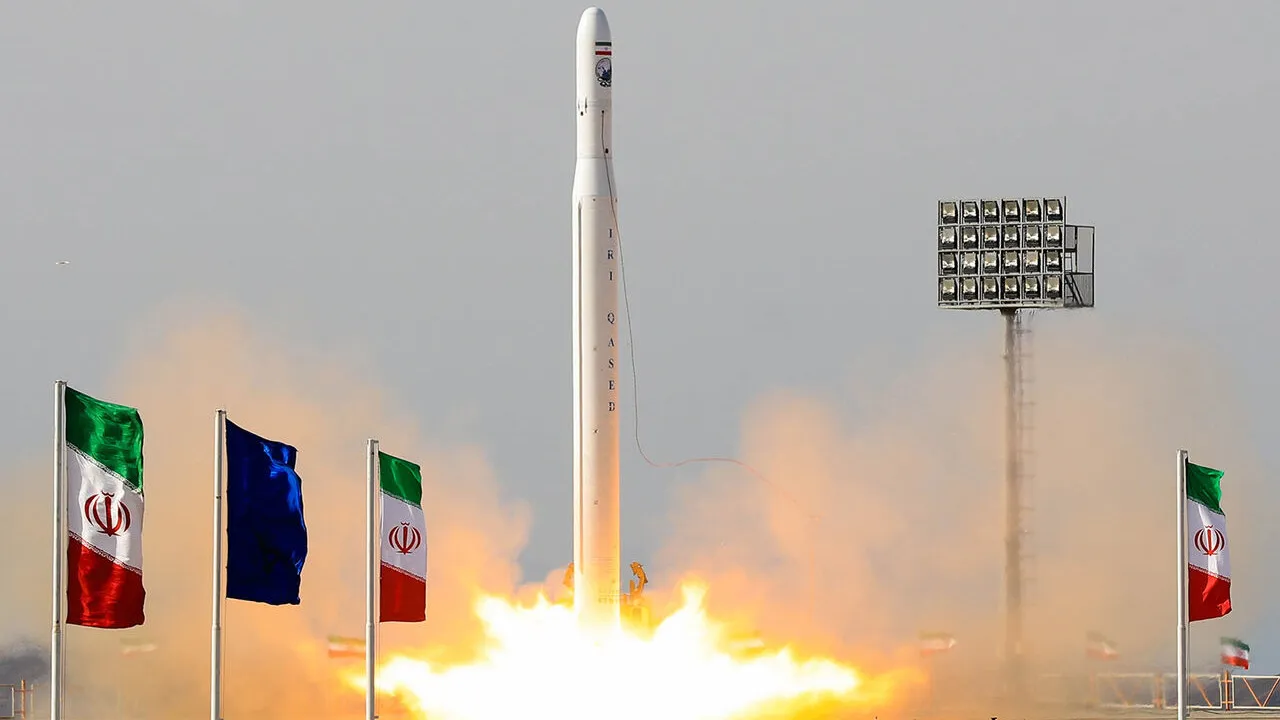
Following in the footsteps of the Safir and Simorgh series, Iran's Qased (meaning "Messenger" or "Emissary") rocket represents another significant step in the nation's space ambitions. The Qased 2, in particular, showcases an evolution in design and propulsion, distinguishing itself from its predecessors.
A Hybrid Approach to Space:
Unlike the purely liquid-fueled Safir, the Qased family reportedly incorporates a hybrid propulsion system, often featuring a solid-fueled first stage and a liquid-fueled upper stage. This combination can offer advantages in terms of faster launch preparation and potentially greater thrust.
- Solid-Fueled First Stage: This stage is designed to provide powerful initial thrust, lifting the rocket quickly off the launch pad.
- Liquid-Fueled Upper Stage: The precision and throttleability of liquid propellants in the upper stage are crucial for fine-tuning the orbit and accurately deploying satellites.
Key Missions and Significance:
The Qased rocket series is primarily associated with launching satellites for Iran's Revolutionary Guard Corps (IRGC). These missions often involve imaging and reconnaissance satellites, intended to enhance Iran's surveillance capabilities.
One notable launch linked to the Qased was the deployment of the Noor (Light) satellite, a military reconnaissance satellite. These launches demonstrate Iran's increasing ability to develop and deploy satellites for various purposes, including national security.
The Qased 2, as an iteration of this series, signifies Iran's continuous efforts to refine its rocket technology, enhance payload capacity, and achieve greater reliability in its space launches. The development of such rockets underscores Iran's long-term commitment to its space program and its goal of achieving self-sufficiency in space access.