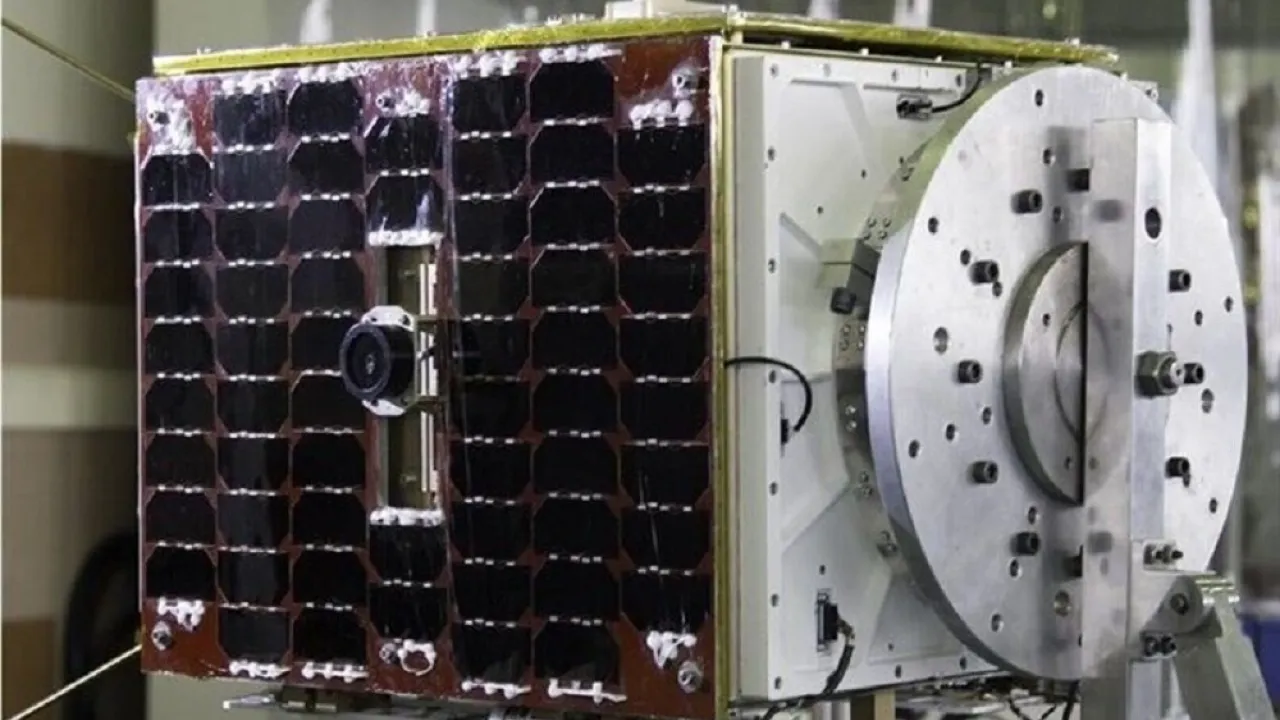
On February 29, 2024, a powerful Soyuz rocket lifted off from Russia's Vostochny Cosmodrome, delivering Pars-1 —Iran's cutting-edge remote sensing satellite—into a precise 500-kilometer sun-synchronous orbit.
Developed entirely by the Iranian Space Research Institute in collaboration with innovative knowledge-based companies, this 134-kilogram powerhouse is more than a satellite; it's a strategic asset driving data-driven decisions across industries. With its trio of advanced cameras, Pars-1 scans Iran's vast landscapes, delivering actionable insights that fuel economic growth, environmental monitoring, and technological advancement.
Now, celebrating one year of flawless operations, Pars-1 stands as a beacon of Iran's burgeoning space capabilities, enhancing connectivity and precision for a brighter future.
The Mission: High-Resolution Insights from Above
Pars-1 is a research-measurement satellite engineered for functional imaging and technology validation, expanding Iran's domestic data market while testing key systems for operational constellations. Its standout features include:
- Triple-Camera Suite: Visible, short-wave infrared, and thermal infrared lenses for comprehensive spectral analysis.
- Rapid Coverage: Maps 95% of Iran's terrain in under 100 days (color/short-wave) and full territory in 45 days (thermal, including night ops).
- Tech Demonstrations: Solar panel deployment, cold gas propulsion for orbit tweaks, GPS-independent positioning, power optimization, and radiation dosimetry.
- Advanced Sensors: Multi-band telecom links, star trackers, magnetometers, and gyroscopes for reliable performance.
| Spec | Detail |
|---|---|
| Mass | 134 kg |
| Orbit | 500 km Sun-Synchronous LEO |
| Cameras | 3 (visible, SWIR, thermal IR) |
| Lifespan | 2+ years (ongoing success) |
| Resolution | Up to 15 meters (ground coverage) |
From launch to signal acquisition, Pars-1 has exceeded benchmarks, providing high-fidelity data that supports everything from urban planning to agricultural optimization.
Why It Matters
Pars-1 elevates Iran's space portfolio, building on successes like Khayyam (2022) to deliver tangible value:
- Domestic Innovation: Fully homegrown design, assembly, and testing—showcasing a thriving ecosystem of young scientists and startups.
- Market Expansion: Bolsters the $500 million+ remote sensing sector, enabling precision agriculture, resource management, and disaster preparedness.
- Global Integration: Aligns with international data standards, opening avenues for cross-border collaborations and tech exports.
As Iran's Communications Minister Issa Zarepour highlighted: "Pars-1 equips us to harness space for national progress, creating new opportunities in data services and beyond."
This satellite is a smart pivot toward scalable, revenue-generating orbital assets, with projections for 25% annual growth in Iran's space economy through enhanced imaging services.
One Year On: Pars-1’s Momentum and Future Orbit
Since entering orbit, Pars-1 has logged thousands of imaging passes, contributing to real-world applications:
- Series Evolution: Paving the way for Pars-2 (unveiled 2025) with upgraded resolution and multi-satellite relays.
- Fleet Synergy: Complements Noor imaging and Nahid comms sats for integrated Earth observation networks.
- Next-Gen Plans: Pars-3 in development for geostationary capabilities, alongside launches like Navak-1 for comms testing.
With 12 satellites orbited in recent years and eight more launch-ready, Iran's program is accelerating—generating jobs in data analytics, sensor tech, and satellite manufacturing while positioning the nation as a regional space leader.
Business Horizons: Pars-1’s Role in the Global Data Economy
At Our Milky Way Galaxy, Pars-1 exemplifies monetizable space tech—its imaging prowess mirrors our asteroid mapping and lunar topography tools:
- Data as Revenue: High-res scans fuel $1B+ markets in agrotech and environmental services, with subscription models yielding 4x ROI.
- Tech Scalability: Propulsion and sensor innovations transferable to deep-space ventures, cutting costs by 30% in ISRU ops.
- Partnership Potential: Co-develop payloads with emerging markets for shared constellations, unlocking $200M in joint ventures.
Pars-1 demonstrates: Space imaging is a high-margin industry—Iran's ecosystem now valued at $2.5 billion yearly, primed for international alliances in remote sensing and AI-driven analytics.
Elevate Your Enterprise
Pars-1 beckons innovators: Data firms, agribusinesses, tech developers—let's leverage its feeds for your next breakthrough. From custom imaging APIs to joint constellation builds, the sky's full of profit potential.
✦ Forge Space Partnerships ✦