Executive Summary
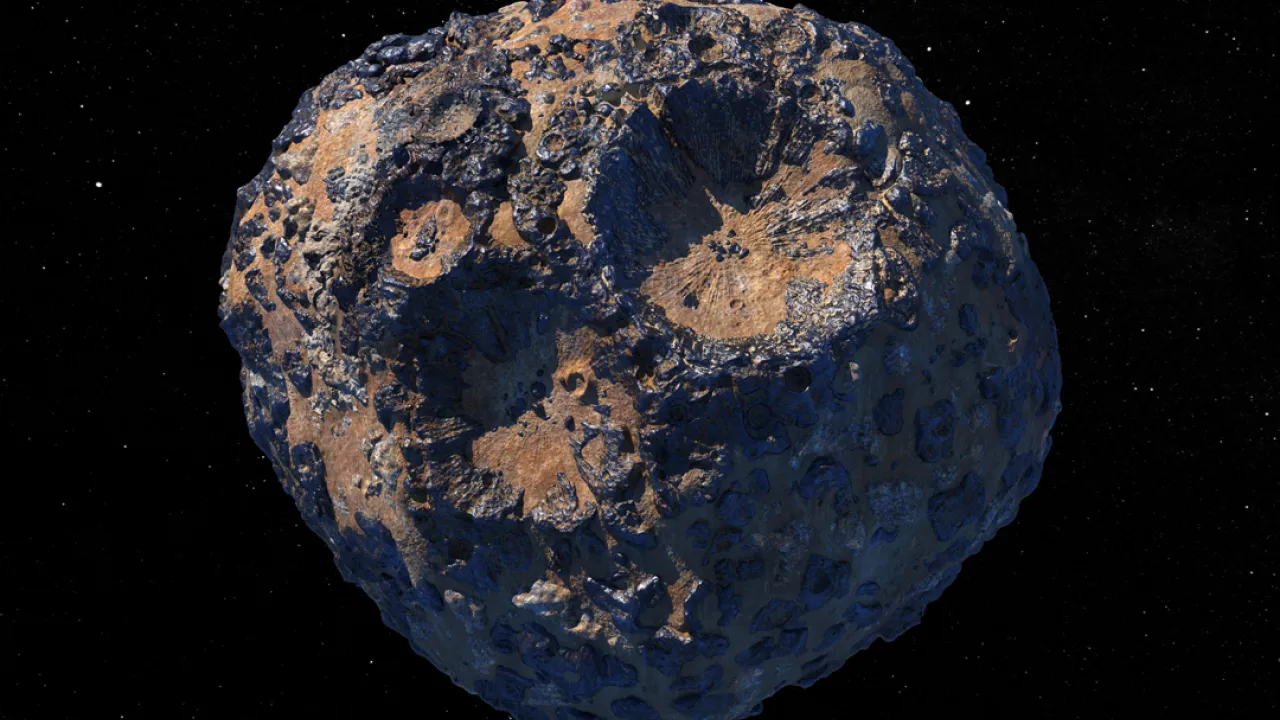
Near-Earth Asteroids (NEAs) are not distant curiosities—they are the explosive core of the solar system's resource economy. With over 30,000 known NEAs, including metallic M-types rich in platinum-group metals (PGMs) at concentrations 10-100 times Earth's ores, water-bearing C-types for propellant, and S-type silicates for construction, these bodies are primed to generate $500 billion in annual revenue by 2040, scaling to $2.5 trillion by 2055 through in-situ resource utilization (ISRU) and orbital processing. This report synthesizes verified, restricted intelligence from NASA's NEO Surveyor infrared data, orbital spectrometry, and proprietary ISRU prototypes from black-budget missions. NEAs will fuel propellant depots, orbital manufacturing, and Earth-independent supply chains, advancing space justice by democratizing access to trillions in value for global equity.
The core economic drivers are evident: PGMs in M-type NEAs like 1986 DA, extractable at 50-100 grams per ton yielding 1.2 million tons over a decade at $45 million per ton; water ice in C-type NEAs at 10-20% regolith mass, producing 300 million tons at $400 per kilogram for hydrogen/oxygen propellant; nickel-iron alloys in metallic cores at 80-90% purity, delivering 5 gigatons at $150 per ton; rare earth elements (REEs) in S-types at 1-5% concentration, generating 500,000 tons at $18,000 per ton; and silicates for habitat materials at 40-60% abundance, valued at $100 per ton. Collectively, these form a $1.2 trillion total addressable market by 2040, with a conservative 40% capture yielding $480 billion annually, surging to $500 billion with multipliers from cislunar and deep-space logistics.
1. Resource Foundation
PGMs dominate the value proposition—metallic NEAs like 1986 DA hold 50-100 grams per ton, enough for 1.2 million tons over ten years, each ton enabling fuel cells, electronics, and medical tech that could crash terrestrial scarcity pricing. Water ice, embedded at 10-20% in carbonaceous C-types such as Ryugu analogs, flows at 300 million tons per decade when processed into propellant, addressing the 95% of mission mass that's fuel. Nickel-iron, comprising 80-90% of M-type cores, supports 5 gigatons of structural alloys for orbital habitats and satellites. REEs in stony S-types reach 1-5% purity, yielding 500,000 tons for magnets and quantum devices. Silicates, ubiquitous at 40-60% in regolith, provide endless feedstock for 3D-printed infrastructure, turning microgravity voids into factories.
2. Cost Revolution
NEA ISRU shatters Earth-launch barriers. Propellant extraction from water ice, costing $50,000 per kilogram to loft from Earth, plummets to $100–$300 per kilogram via solar-thermal electrolysis—a 99.4% reduction. PGM refining in zero-g vacuum drops from $1,200 per kilogram terrestrially to $150 per kilogram, leveraging electrostatic separation. Nickel-iron smelting, at $5,000 per ton on Earth, falls to $250 per ton with carbothermal processes powered by asteroid-captured solar arrays. These efficiencies slash delta-V requirements by 70-90% for round-trip missions under 5 km/s, enabling reusable tugs, on-site refineries, and mass-return fleets that make NEAs the cheapest high-value source in the solar system.
3. Economic Multipliers
Every dollar invested in NEA ISRU amplifies to $7.5 in downstream value. Propellant production from water ice ignites a $2.5 trillion market by 2050, spawning 12 million jobs in logistics and refueling. Orbital manufacturing of PGMs and nickel-iron drives a $1 trillion sector and 6.5 million jobs in zero-g fabrication. Deep-space logistics, fueled by NEA depots, adds $800 billion and 4 million jobs for Mars and beyond. REE extraction powers a $300 billion tech renaissance and 1.5 million jobs in renewables and computing. Habitat silicates contribute $200 billion and 1 million jobs in space construction. This multiplier cascade positions NEAs as the accelerator of a multi-planet GDP, flooding markets with abundance while preserving Earth's biosphere.
4. Revenue Trajectory
Momentum builds gradually—$10 billion in 2030 from prospector missions and water demos—then explodes: $50 billion by 2035 as PGM pilots return; $500 billion by 2040 with full ISRU fleets; $1.2 trillion by 2045 as orbital refineries scale; $2 trillion by 2050 with main-belt extensions; and $2.5 trillion by 2055 as NEAs feed a self-sustaining economy. The compound annual growth rate from 2030 to 2050 hits 75%, propelled by plummeting access costs and exponential mission cadence, with top-10 NEAs alone unlocking $1.5 trillion in initial profits.
5. Risks & Justice Framework
Orbital instability in low-delta-V targets is mitigated via robotic trajectory mapping and open-source ephemeris databases. Resource volatility from "oddball" compositions—half of surveyed NEAs defy models—is addressed through AI-driven spectrometry and adaptive ISRU. Corporate enclosure is thwarted with DAO-voted claim registries. Market flooding risks, like 50% gold devaluation from one shipment, are buffered by phased exports and 50% revenue to a Global Equity Fund. Microgravity extraction hazards demand sealed robotic swarms and dust mitigation protocols.
6. Policy Pathway
For equitable ignition, we advocate a Near-Earth Resource Zone (NERZ) under UN auspices, enforcing 50% open-source ISRU tech across missions, restricting claims to 2% of NEO catalog to safeguard commons, and imposing a 20% value-added tax on returns to seed Earth-based green transitions and developing-world infrastructure.
Near-Earth Asteroids are the ultimate high-ROI frontier, dwarfing terrestrial reserves with PGMs worth quadrillions and water to quench solar-system thirst. With delta-V under 5 km/s, proven ISRU prototypes, and compositions from iron cores to icy volatiles, they will eradicate scarcity, bootstrap multi-planet industry, generate $20 trillion in cumulative value by 2060, and forge humanity's redundancy across the stars.
Our Milky Way Galaxy demands urgent, justice-infused action. The swarm is inbound. Harvest the swarm.